

Can I Travel While Waiting for a Visa Decision?
Short answer: it depends, and getting it wrong can cause you serious problems. Here’s what you need to know before you book any flights.
This is a common question and it’s easy to see why. You’ve submitted a visa application, you’re waiting (usually for weeks or months), and life doesn’t exactly stop in the meantime. For those waiting inside the UK: there may be a family event abroad, a work trip, or just a holiday you already had planned.
Worse still, if you’re enduring a long wait overseas you might be separated from loved ones, and the temptation for a quick UK visit is understandable on a very human level.
While there’s no single yes-or-no answer to apply across the board, there are some very clear dos and don’ts – and you’ve come to the right place to find them. Let’s break it down.
First Things First: What’s Your Current Status?
Before thinking about travel, you need to be clear on your current status. Are you outside the UK waiting for a visa granting entry? Or are you currently in the UK on a visa that’s still running or expired? What exactly have you applied for?
Each of these situations can be quite different, with important consequences for international travel.
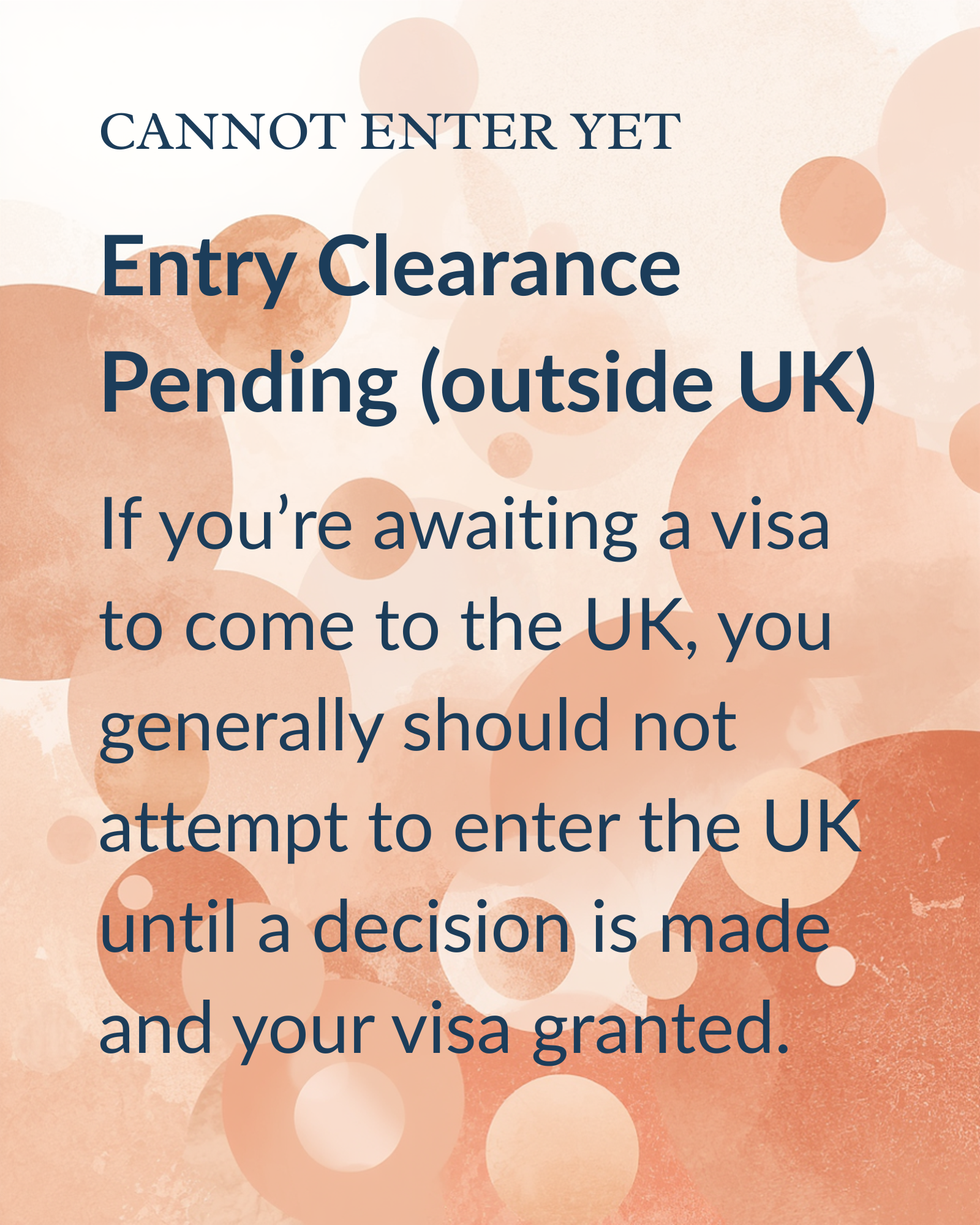
Applying from Overseas (Entry Clearance)

If you’ve applied for a visa to enter the UK from overseas (also known as entry clearance), you should not attempt to enter the UK while your application is pending.
The reason is straightforward: it’s the visa itself that gives you permission to enter the UK, not the act of applying for one. A pending application confers no right of entry whatsoever.
If you try to enter the UK anyway, what happens next will depend on whether you’re a visa national or not, but either way, the risks are real and hardly worth taking.
If you’re a visa national, you have no permission to enter the UK at all until your visa is granted. Arriving at a UK port of entry without a visa means you’re likely to be refused and put on the next return flight. Worse, a refusal of entry creates a record on your immigration history that you’ll need to disclose in future applications, potentially for years to come.
If you’re a non-visa national, the position is slightly different but still complicated. Because you don’t need a visa for short visits, you’d technically be seeking entry as a Standard Visitor. That’s not an automatic refusal of entry, but it comes with a big catch. A genuine visitor must intend to visit the UK only temporarily and must not plan to stay long-term. If a border official identifies that you have an outstanding visa application, they may conclude that you are not a genuine visitor at all, but someone trying to get into the UK by the back door while you wait for the front door to open. Officers may be concerned that you intend to remain in the UK, even if your visa application is ultimately refused. Those suspicions alone can be enough to refuse you entry and put you on the next return flight. And, as for visa nationals, a refusal of entry creates a record on your immigration history that you’ll need to disclose in future applications, potentially for years to come.
Note that this isn’t a total ban on all international travel. As long as you haven’t handed over your passport as part of the visa process (increasingly rare these days as everything goes digital), you can travel to other countries – just not the UK.
The bottom line: entering the UK with a pending visa application in the background is fraught with risk and should be avoided. The risk is rarely, if ever, worth the reward of an early arrival in the UK.
Applying from Within the UK (Extensions, Switching, and Leave to Remain)
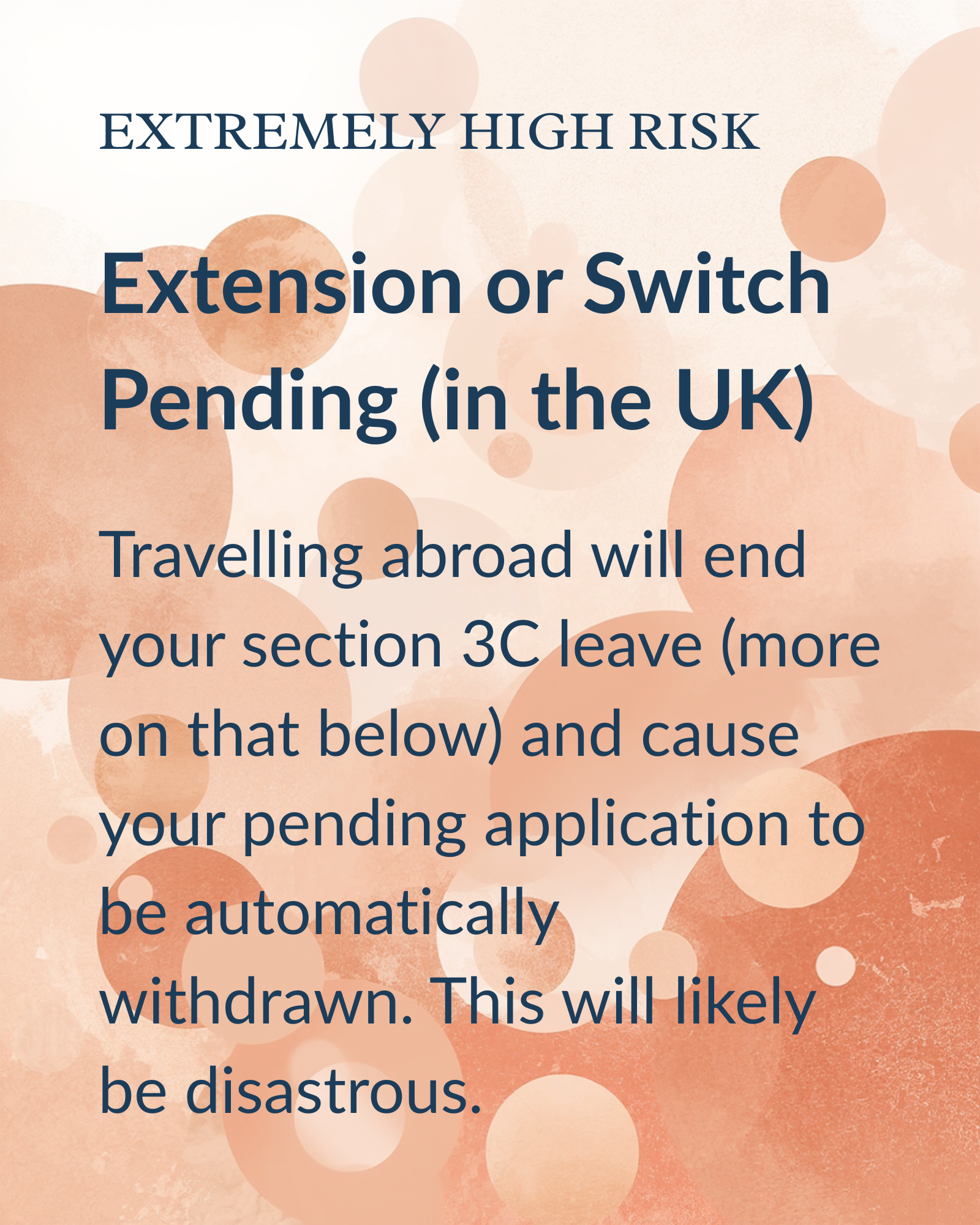
This is a big no-no. If you’ve applied to extend or switch your UK visa before it expired, and the expiration date has now passed, you’re almost certainly on something called section 3C leave. This is a legal provision that keeps you in the UK lawfully while your application is being decided. It’s genuinely useful, as without it you’d technically be overstaying.
The catch: section 3C leave disappears the moment you leave the UK and it cannot be used to re-enter. If you exit the UK while on section 3C leave, you’d therefore need to apply for entry clearance again from abroad, which will be complicated and disruptive, both to your present life in the UK and also potentially your path to settlement.
On top of the 3C dilemma, exiting the UK with a pending visa application normally means that the application will be treated as withdrawn. If you’ve already attended a biometrics appointment then your application fee will not be refunded, making this both a serious and potentially costly mistake.
The bottom line: don’t leave the UK while awaiting a visa decision. The consequences just aren’t worth it.
Citizenship: an Important Exception
Like all good rules there are exceptions, and citizenship is one.
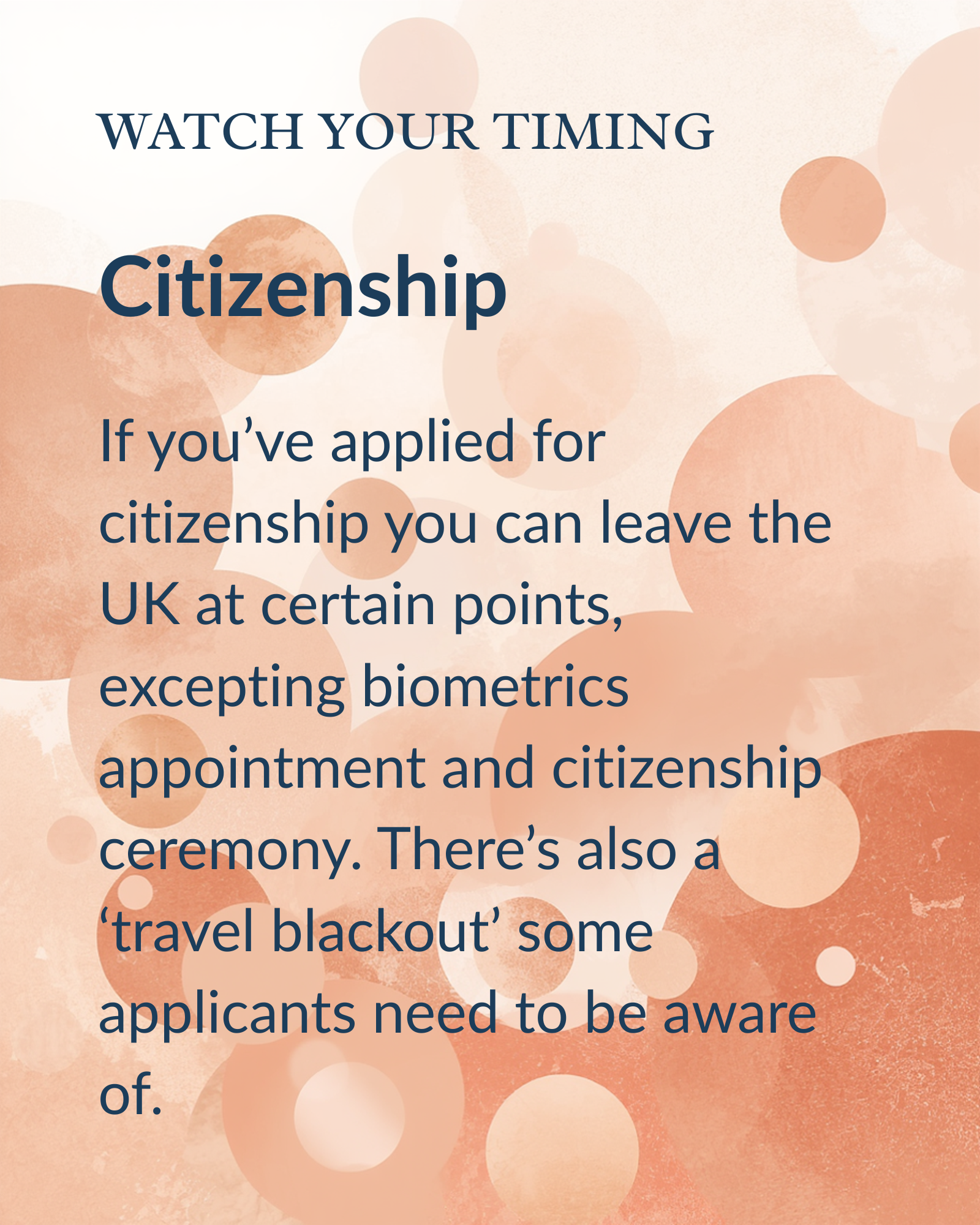
If you have Indefinite Leave to Remain (ILR) or Settled Status and you’ve applied to naturalise as a British citizen, you can still travel out of and back into the UK while your application is being decided. This is because your underlying leave – the ILR or Settled Status – remains valid and unaffected by the citizenship application. You’re not relying on the citizenship application for permission to be in the UK; you already have that permission independently and section 3C is not engaged.
That said, there are still things to be mindful of. On a practical level, you’ll need to attend both your biometrics appointment and your citizenship ceremony physically in the UK, and both have strict time limits for attendance – so keep an eye on those dates when planning any trips abroad.
There’s also a peculiar travel ‘blackout’ created by the rules for dual nationals, which can catch people off guard. Here’s the issue: you officially become British not when you receive the decision email, but instead at the citizenship ceremony. From that point, you are technically a dual national, and dual nationals are generally required to use a British passport to enter the UK. The problem? You can't possibly have a British passport yet as you only just became British, and a first-time passport application can take up to ten weeks to process.
This means there can be a window of weeks after your ceremony during which travelling outside the UK is genuinely inadvisable. You're British, but you can't prove it in the way the rules require.
So if you have an overseas trip planned, try to schedule it before your ceremony rather than after, or be prepared to sit tight until your British passport arrives. On that note, get your passport application prepped and ready to submit straight after the ceremony – the sooner you apply, the sooner the blackout ends.
Note that this travel blackout does not apply to EU nationals with settled status, who can use their European passport to re-enter the UK.
The bottom line: there’s much more flexibility around travel with a pending citizenship application, but there are still pitfalls to be mindful of.
A Final Word
Immigration law is fraught with technicalities, and the rules around travel with an application pending are no different. The consequences of getting it wrong can be severe and expensive.
If you’re unsure about your own situation, please do take advice before you travel, not after. A short conversation with an immigration solicitor can save you from a refusal of entry, a withdrawn application, or months of disruption to your life.
I can help. If you’d like to discuss your circumstances, get in touch for a clear, straightforward steer in the right direction.